How Yard Drainage Can Destroy Retaining Walls
Poor yard drainage is one of the fastest ways to destroy a retaining wall. Learn why walls fail, what warning signs to watch for, and smart fixes that last.
When Yard Drainage Destroys a Retaining Wall
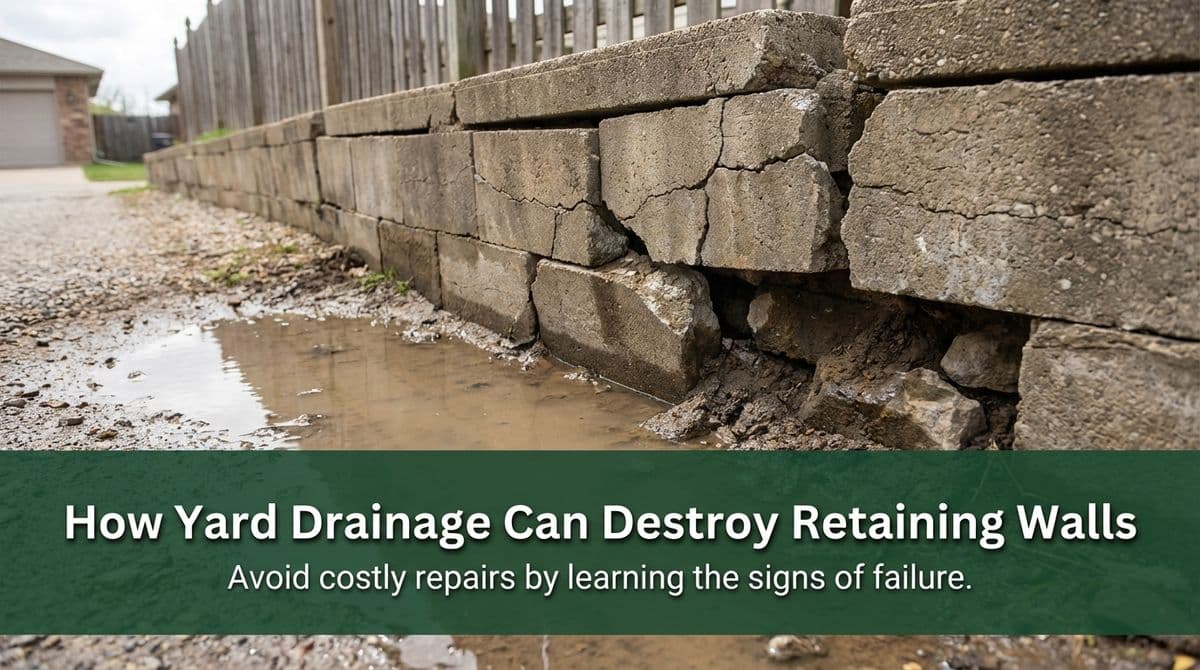
We recently got a call from a customer — let's call him Mark — who was worried about his parents’ property. They had “really bad drainage” throughout the yard and a retaining wall at the base of the property that had started to fail. There was even a visible hole in the wall where soil was washing out after every heavy rain.
Mark was pretty sure the poor drainage had caused the retaining wall problem, and based on what he described, we had to agree that was very likely. We booked a time to meet him on-site, and his questions that day are the same questions we hear from a lot of homeowners with retaining walls that are leaning, cracking, or bowing.
So in this post, we want to walk you through how bad yard drainage can cause retaining walls to fail — and more importantly, what you as a homeowner can do about it before the damage gets worse (and more expensive).
Why Retaining Walls Need Proper Drainage
A retaining wall isn’t just a decorative border. Its job is to hold back thousands of pounds of soil safely. When water gets involved and there’s no proper way for it to escape, that load on the wall can skyrocket.
Here’s what we often see behind a failing wall:
- Saturated soil that turns to heavy, sticky mud after every rain
- Standing water that lingers at the base or behind the wall
- No gravel backfill — just clay or topsoil packed tight against the blocks or timbers
- No drainage pipe (French drain or perforated pipe) to move water away
So instead of only supporting soil, your wall is suddenly holding back waterlogged soil. Water weighs about 8.3 pounds per gallon, and when it’s trapped behind a wall, the pressure builds up and pushes out.
How Poor Drainage Makes Retaining Walls Fail
When we meet homeowners like Mark, they usually point to one or more of these symptoms:
- A wall that’s leaning outward
- Cracks running through blocks or along mortar joints
- Bulges or bowing sections
- Holes where soil is washing through the face of the wall
- Visible gaps behind the wall where soil has settled or eroded
Most of the time, drainage is involved in at least one of these ways:
1. Hydrostatic Pressure Builds Up
Without good drainage, water collects behind the wall instead of draining down and away. That trapped water creates hydrostatic pressure, which pushes directly on the wall. Over time, that pressure can cause the wall to lean, bow out, or crack.
2. Soil Erosion and Washouts
In Mark’s case, there was already a hole in the wall. That usually means water has found a weak spot and started carrying soil out with it. As the soil washes away, it leaves voids behind the wall, and eventually the wall loses support and sections can collapse.
3. Freeze–Thaw Damage
In colder weather, water trapped behind a wall can freeze and expand. That expansion acts like a wedge, opening up cracks and pushing blocks apart. When it thaws, more water moves in and the cycle repeats, making existing problems worse.
Signs Your Retaining Wall Has a Drainage Problem
You don’t have to wait for a wall to fall over to know there’s a problem brewing. We recommend walking your property and looking for these early warning signs:
- Puddles or soggy areas along the top or bottom of the wall after rain
- No visible weep holes or drains in the wall face
- Weep holes that are present but never drain water (likely clogged)
- Moss, algae, or efflorescence (white, chalky deposits) on the wall surface
- Soil settling or sinking near the edge above the wall
If you’re seeing several of these, it’s a pretty strong clue that water isn’t moving where it should and that the wall is under extra stress.
What Homeowners Can Do: Fixes That Actually Help
When we walked Mark’s parents’ property, we focused on two goals: safely dealing with the wall and correcting the overall yard drainage so the problem wouldn’t come back.
1. Improve Yard Drainage First
Sometimes the issue starts way up the hill from the wall. Here are common solutions we install:
- Regrading the yard so water flows away from the house and toward a safe outlet
- Installing French drains to intercept water before it reaches the wall
- Adding or redirecting downspout extensions so roof runoff doesn’t dump right above the wall
- Creating swales (shallow, grassy channels) to guide water around problem areas
We always explain to homeowners that if we don’t fix the drainage feeding into the wall, any wall repair will be short-lived.
2. Add Proper Wall Drainage
In many failing walls, there’s no drainage system at all. A long-lasting wall usually needs:
- Gravel backfill directly behind the wall for several feet, not just soil
- A perforated drain pipe (with fabric wrap to keep silt out) at the base of the wall
- Weep holes or outlets so water in the drain pipe can escape
Depending on how badly the wall is failing, we may be able to excavate behind it and retrofit a drainage system, or we may recommend rebuilding the wall with drainage integrated from the start.
3. Repair vs. Rebuild: How We Decide
Homeowners often ask, “Can we just patch this?” Sometimes we can. For example:
- Minor leaning or small cracks + drainage issues = often repairable with reinforcement and new drainage.
- Large bulges, major leaning, or broken sections = usually safer and more cost-effective to rebuild.
We’ll typically take measurements, check how much the wall has moved, and look for hidden voids behind it before recommending a plan.
DIY Drainage Fixes: Common Mistakes to Avoid
We understand the temptation to tackle drainage yourself, and there are small things homeowners can safely do. But we also see a lot of well-intentioned DIY work that actually makes problems worse. A few examples:
- Drilling random holes through a wall face without adding proper back drainage, which just creates new weak spots.
- Adding soil instead of gravel behind a wall, which holds more water and increases pressure.
- Using solid (non-perforated) pipe behind the wall with nowhere for water to go.
- Routing downspouts to discharge right at the top of the wall.
If you want a safe DIY step, start by extending downspouts well away from the wall and clearing debris from existing drains and weep holes. For anything involving excavation or structural changes, we strongly recommend bringing in a professional.
Costs and Timelines: What to Expect
Every property is different, but to give you a general sense:
- Basic drainage improvements (downspout extensions, small swales, minor grading) can often be completed in a day or two.
- Installing a French drain or more extensive yard drainage typically takes 1–3 days, depending on length and access.
- Retaining wall repairs (for smaller, structurally sound walls) may run a couple of days.
- Full wall replacement with proper drainage can take several days to a week or more.
Because materials, wall height, and access vary so much, we really need to walk the site — just like we did with Mark — to give an accurate estimate. But in almost every case, fixing drainage early is far cheaper than waiting for a full wall failure.
When to Call for a Professional Inspection
If you’re not sure whether it’s time to get help, use this quick checklist. It’s a good idea to schedule a professional inspection if:
- Your wall is visibly leaning or bulging.
- You can see holes, washouts, or missing soil near or under the wall.
- Water regularly pools near the wall or flows straight toward it.
- You notice new cracks forming or old cracks getting larger.
- The wall is supporting a driveway, patio, structure, or area where people walk regularly.
If any of these sound familiar, the safest next step is to have a drainage and retaining wall professional come out, take measurements, and walk you through your options.
Worried About Your Retaining Wall? Start with the Water.
When Mark first called us, he was focused on the hole in the wall — and that definitely needed attention. But once we walked the property, we showed him how the entire yard’s drainage was setting that wall up to fail. By addressing the water issues and then repairing the wall correctly, we were able to give his parents a solution that should last for years.
If you’re seeing signs of wall movement, erosion, or standing water in your yard, don’t wait for a collapse. Get the drainage checked, get the wall evaluated, and give that structure the support it needs to do its job safely.