Seeding a Sloped Backyard with Native Grasses
We recently helped a homeowner seed a sloped backyard with native grasses. Here’s how we prep soil, control erosion, and create a low-maintenance, natural look.
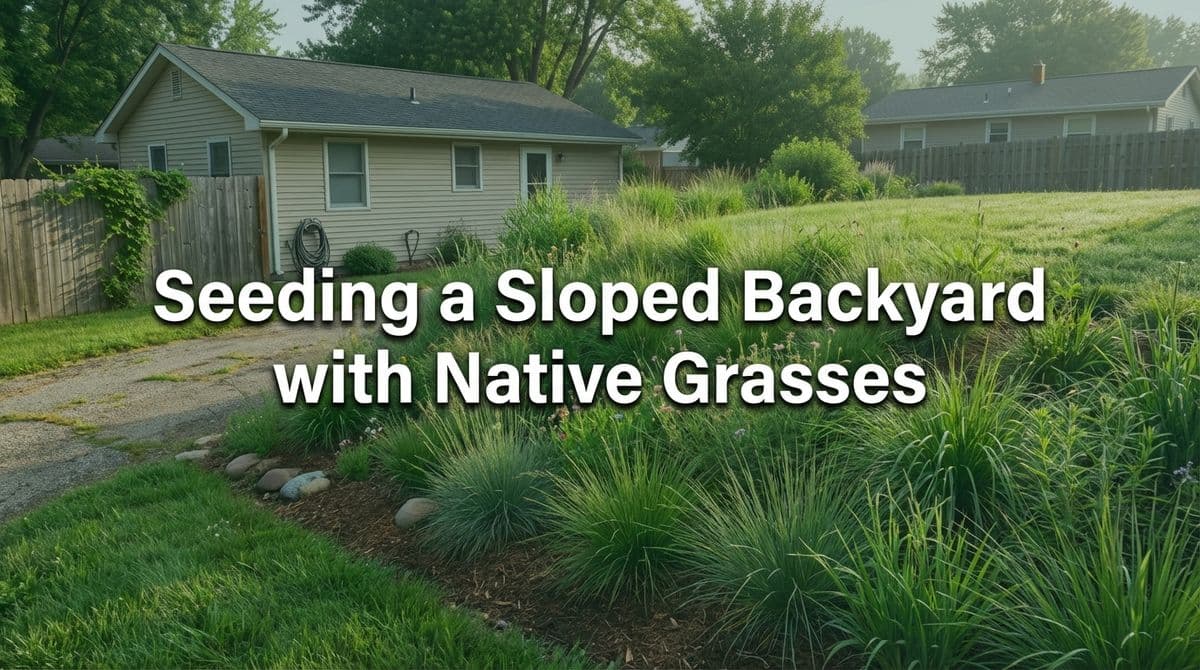
We recently got a call from a customer — let’s call her Anna — who had just moved into a home with a tricky backyard. The entire space behind the house was a slope, a little hilly and “pretty slopy,” as she put it. She didn’t want a perfectly groomed, golf-course lawn. Instead, she wanted something that looked natural and used native grasses that actually belong in North Carolina.
Anna asked if we could handle the whole process: soil preparation, seeding, and erosion control, using either seed she provided or a native mix we recommended. That conversation is a great example of how we approach seeding sloped yards, so I’ll walk you through the same advice we shared with her.
Step 1: Look at the Slope Before You Touch the Soil
On any sloped backyard, we start by walking the site and asking a few questions:
- How steep is the slope? Gentle roll or almost too steep to mow?
- What’s the sun exposure? Full sun, part shade, or mostly shade?
- What’s the soil like now? Packed clay, rocky, or loose and sandy?
- Are there existing erosion problems? Washed-out channels, bare spots, exposed roots?
With Anna, the slope was moderate — steep enough to worry about erosion but still walkable. The soil was typical piedmont clay, and there were bare areas where rain had already started to wash soil downhill. That told us we needed to balance good soil prep with strong erosion control from day one.
Step 2: Smart Soil Prep Without Creating a Mudslide
On flat ground, you can till deeply and rake everything smooth. On a slope, if you overwork the soil, the first heavy rain can carry it away. Here’s how we usually prep:
- Clear the area: Remove weeds, brush, and debris. For tough weeds, we may treat and then wait a couple of weeks.
- Loosen the top 2–3 inches: We lightly till or core aerate instead of deep tilling the whole slope.
- Add organic matter: A thin layer of compost (about ½–1 inch) raked in improves heavy clay and helps hold moisture.
- Shape water flow: We look for spots where water concentrates and, if needed, create gentle diversions so water spreads out instead of carving ruts.
The goal is a surface that’s roughened enough for seed to grab onto, not perfectly smooth. Little grooves and clumps actually help catch seed and slow down water.
Step 3: Choosing Native and Low-Maintenance Grass Mixes
Anna was clear: she didn’t want a standard tall fescue lawn. She wanted a mix of native or native-friendly grasses that looked natural and didn’t need constant pampering. For sloped North Carolina backyards, we often look at:
- Fine fescues (native-friendly): Shade-tolerant, soft texture, and lower water needs than a typical cool-season lawn.
- Native warm-season bunchgrasses: Such as little bluestem or sideoats grama, which develop deep roots and handle drought and erosion well.
- Meadow-style mixes: Native grasses blended with low-growing wildflowers for a naturalized, low-mow look.
The exact mix depends on your sun/shade and how “wild” you want the space to look. With Anna, we recommended a blend that would stay fairly low, fill in over time, and not require weekly mowing.
Step 4: Seeding Technique on a Slope
Once the soil is prepped and you’ve chosen the mix, the way you put seed down matters even more on a hillside:
- Broadcast in two directions: We spread half the seed going up-and-down the slope and the other half side-to-side for even coverage.
- Lightly rake or drag: The goal is for most seed to be in the top ¼ inch of soil, not buried deeply.
- Don’t overseed too heavily: Thick seeding can lead to weak, spindly plants that don’t root well.
After seeding Anna’s yard, we focused immediately on protecting that seed from washing away.
Step 5: Erosion Control – Keeping Seed and Soil in Place
On slopes, erosion control is just as important as the seed itself. We commonly use:
- Straw or hay mulch: A light, even layer that covers about 50–70% of the soil surface. It cushions raindrops, holds moisture, and keeps seed from baking in the sun.
- Erosion control blankets: Biodegradable netting or matting that we pin into the slope. These are great for steeper sections.
- Terraces or planting bands: On very steep areas, we may recommend breaking the slope into short planting zones or adding shrubs and groundcovers to anchor the soil.
For Anna, we used straw on the gentler areas and an erosion control blanket on the steeper strip close to the bottom of the hill, where runoff hits hardest.
Step 6: Watering and Early Care for Native Grasses
New native or native-friendly grasses still need consistent moisture to get established, especially on a slope where water can run off:
- Water lightly and often at first: Short, gentle watering once or twice a day to keep the top inch of soil damp, not soggy.
- Avoid heavy bursts: Strong sprinklers can literally push seed downhill. We prefer soft spray nozzles or soaker hoses where possible.
- Gradually reduce frequency: After germination and once the grass is a couple of inches tall, we water less often but more deeply to encourage deeper roots.
Once a native or meadow-style mix is established, it typically needs far less water and fertilizer than a traditional lawn and only occasional mowing or trimming.
Great Lawn Alternatives for Steep or Fussy Slopes
Sometimes the best answer on a slope is, honestly, not a lawn at all. If parts of your yard are very steep or hard to reach, we often suggest:
- Native groundcovers that spread and knit the soil together.
- Shrub and ornamental grass plantings with mulch between them.
- Meadow-style areas you cut only once or twice a year.
We talked through these options with Anna, too, and planned a mix: a seeded native-friendly slope with some small planting beds to break up the hill and add seasonal color.
Thinking About Seeding Your Own Sloped Backyard?
If you’re looking at a hilly backyard and wondering how to get something green and low-maintenance growing there, you’re not alone. The key steps we walked through with Anna apply to almost any sloped yard:
- Assess the slope, sun, and existing erosion.
- Prep the soil lightly and add organic matter.
- Choose native or native-friendly mixes that fit your goals.
- Seed carefully and protect with mulch or blankets.
- Water gently until roots are deep and plants are established.
We’re always happy to come out, take a look, and recommend a plan tailored to your property — whether you’d like us to handle everything or just help with the tricky parts like soil prep and erosion control.